
Engineering
Odour control sizing
Size an odour-control approach from the chemical and gas data available, the duty and the physical constraints—not from a generic unit assumption.

Who this is for
Design engineering firms and project engineers specifying odour treatment
Your operating priority
Base equipment selection on the duty, variability and site constraints rather than a nominal flow alone.
Before you specify or buy
Supply airflows, gas data, peak conditions and layout constraints so design assumptions, treatment options and engineering scope can be reviewed.
What is covered
- Review gas composition, flow and operating pattern where available.
- Assess proposed chemical treatment and the process conditions that govern contact and dosing.
- Identify information gaps and the measurements needed to refine the design.
- In-house RPEQ engineering input can be scoped where required.
What we will ask you
- Gas analysis, flow and variability data
- Existing control equipment and operating history
- Site layout, utilities and relevant approval requirements
This page is information only. Pricing, availability and specifications are provided through an enquiry.
Straight answers
Frequently asked questions
- What data does an engineer need to size an odour control system?
- Start with representative airflows, contaminant concentrations and loading variability, including credible peaks. Add capture requirements, ductwork, layout and operating constraints. Define design assumptions and verification measures before selecting treatment capacity; a single gas reading or nominal airflow is not a complete design basis.
- Can you size a system from an odour complaint alone?
- A complaint helps define the issue, but sizing generally needs further information such as gas composition, flow, variation and site constraints.
- Is the selected equipment guaranteed to remove odour?
- No. Performance depends on the measured duty, design, operation and conditions. The basis and assumptions are stated in the scope.
Field equipment and testing
Real sampling, measurement and dosing equipment. Individual photos are not a controlled performance comparison; interpretation requires the sampling context, method and calibration records.
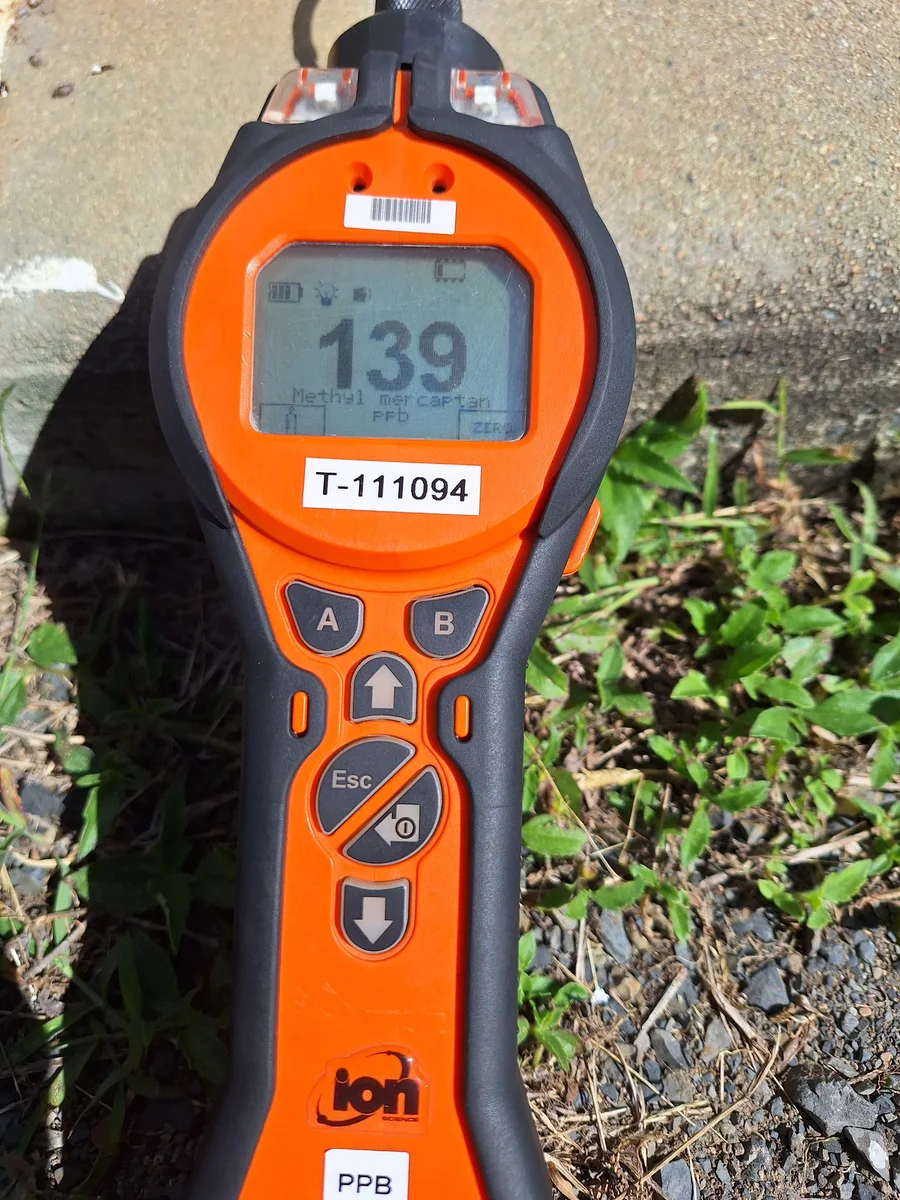
Methyl mercaptan spot reading, displayed in ppb. This is not an H₂S measurement or a documented before-and-after treatment result. 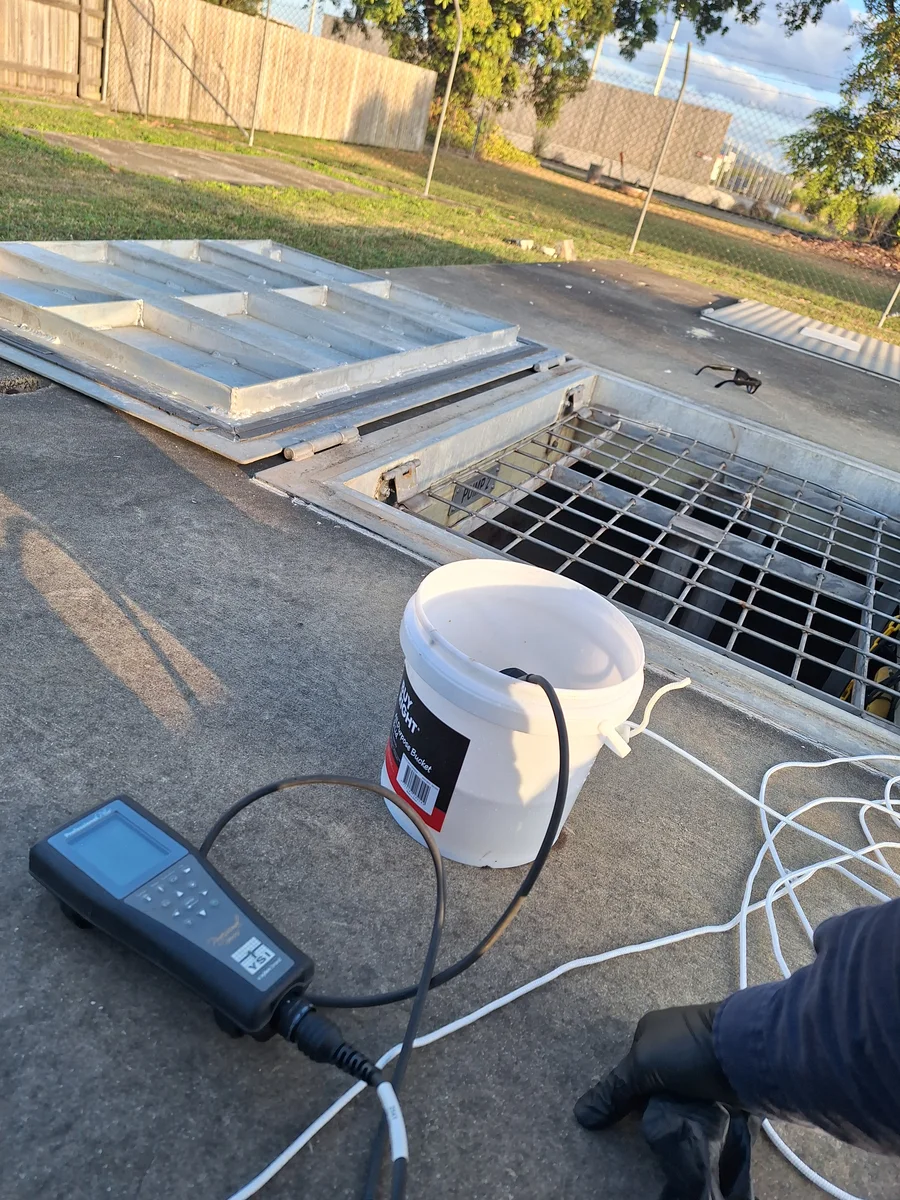
Site sampling and water-quality measurement. Sample location, handling and instrument checks affect interpretation.

