
Sewer programmes
Sewer H₂S, odour & corrosion control
A site-scoped programme to manage sulphide formation, odour and corrosion risk across sewer networks. Septine, Suppressor and magnesium hydroxide (pH Elixir Basic and Premium) are distinct chemistry options. Dosing calibration and performance reporting can also be scoped independently of the chemistry supplier.

Who this is for
Utility network managers and wastewater asset owners
Your operating priority
Manage odour, sulphide and corrosion as connected network risks rather than isolated complaints.
Before you specify or buy
Prioritise problem locations using retention conditions, monitoring and asset observations; agree measurable treatment objectives and operating responsibilities.
What is covered
- Review network layout, retention conditions, current dose points and available sulphide or odour data.
- Assess Septine, Suppressor and magnesium hydroxide against the intended duty; these are separate formulations and options, not interchangeable names.
- Calibrate and report actual dosing performance whether the selected chemistry is supplied by Critical Elixirs or another provider.
- Set a baseline and agree how performance will be reviewed before implementation.
What we will ask you
- Network map and likely retention or problem locations
- Current chemistry, dose records and delivery arrangements
- Available H₂S, odour, corrosion and operating observations
This page is information only. Pricing, availability and specifications are provided through an enquiry.
Straight answers
Frequently asked questions
- How can sewer operators address odour and corrosion together?
- Review sulphide formation, retention time, pH, dose points and conditions at downstream release locations. Pair the chemistry programme with monitoring and asset condition observations. Reduced odour is not proof of safe worker exposure or a measured extension in asset life; those require their own assessments.
- Which chemistries can be considered for sewer H₂S control?
- Septine, Suppressor and magnesium hydroxide (pH Elixir Basic and Premium) are distinct options. Suitability and dose are assessed against network conditions and site data; no single option is assumed to suit every network.
- Can you calibrate dosing if we use another supplier’s chemical?
- Yes. Dosing calibration and performance reporting can be scoped independently of chemical supply, including for chemistry supplied by another provider.
- Does dosing eliminate odour or corrosion?
- No universal outcome is assumed. The programme is scoped from network conditions, data and operating requirements, then reviewed against agreed measures.
- Where can you deploy?
- We support suitable projects throughout Australia, subject to project scope, site access and mobilisation logistics.
Field equipment and testing
Real sampling, measurement and dosing equipment. Individual photos are not a controlled performance comparison; interpretation requires the sampling context, method and calibration records.
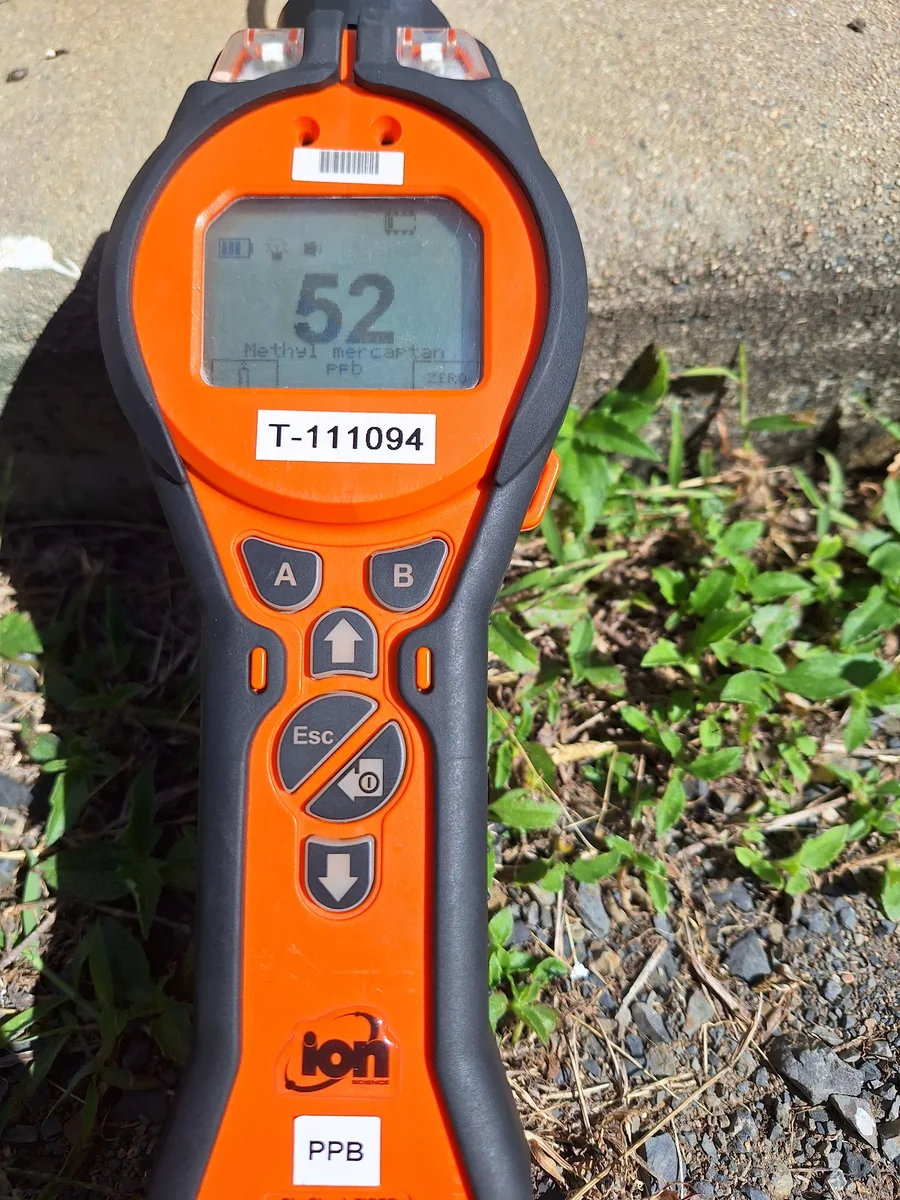
Methyl mercaptan field measurement. A spot reading is not a worker-exposure assessment or a treatment comparison. 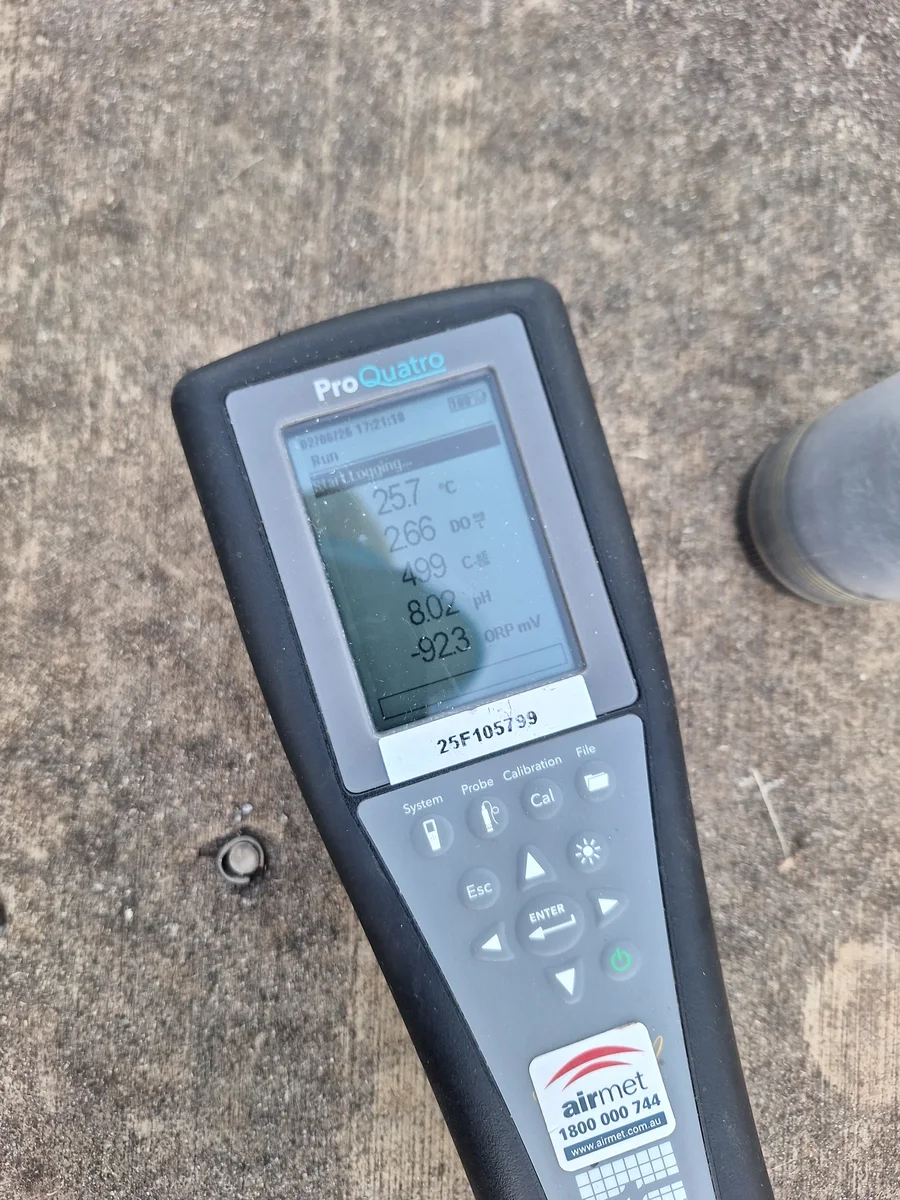
pH and oxidation-reduction potential (ORP) measurements help interpret water conditions alongside sampling and calibration records. 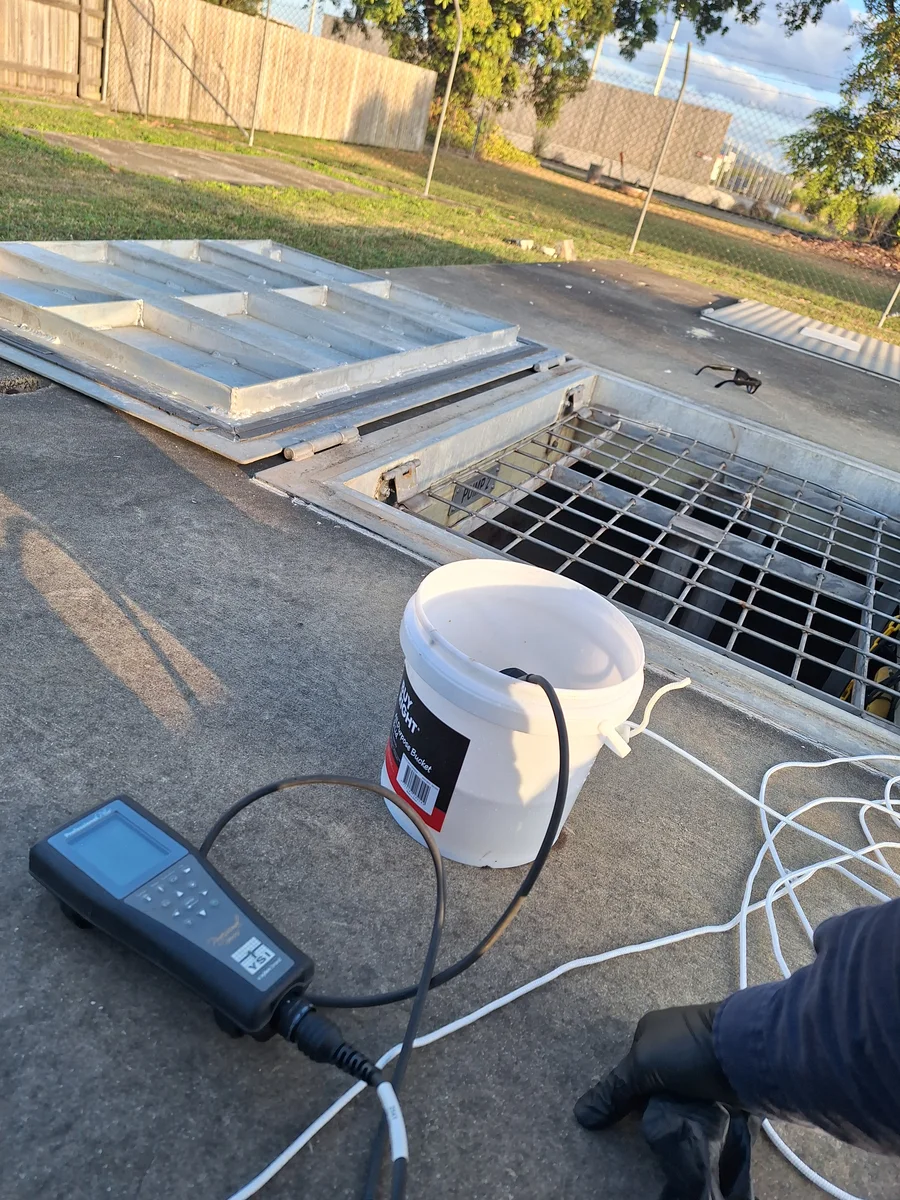
Site sampling and water-quality measurement. Sample location, handling and instrument checks affect interpretation. 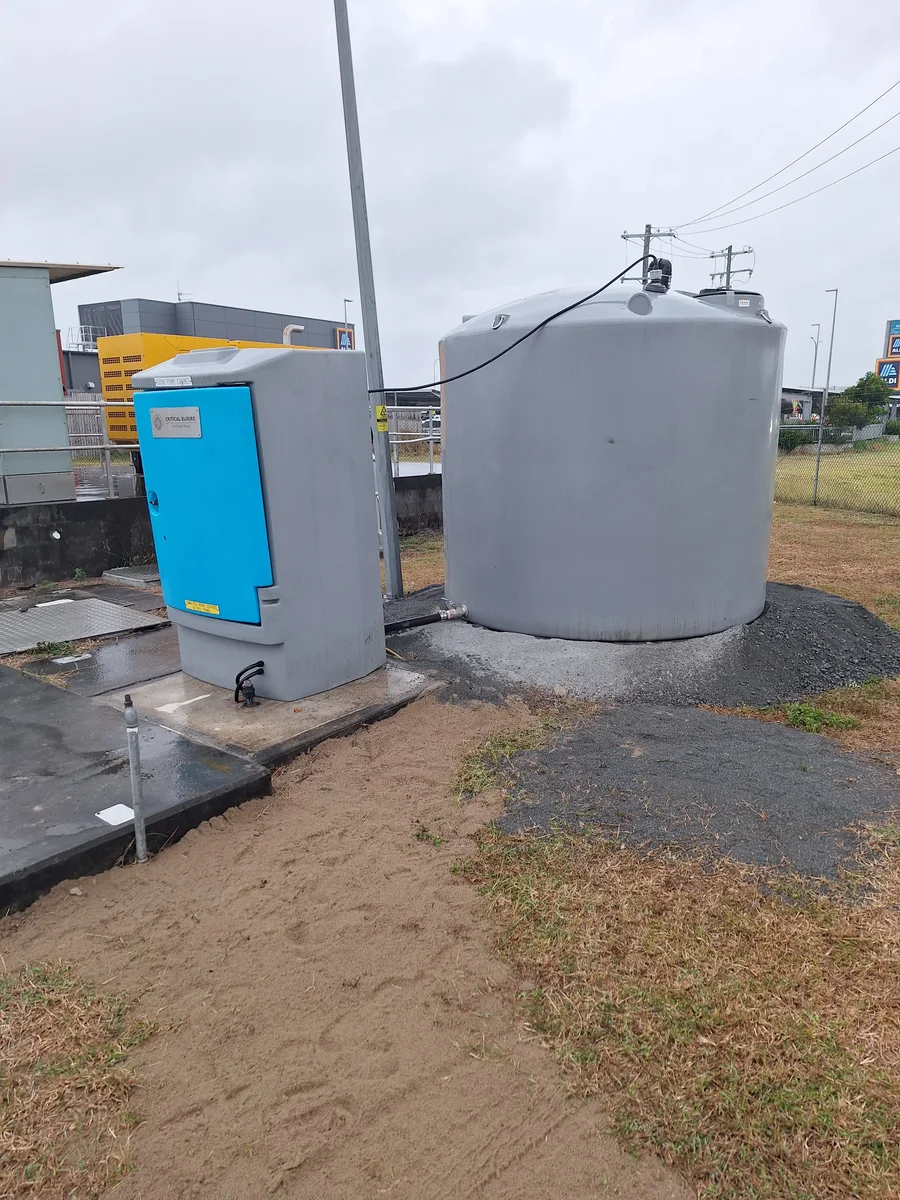
Dosing equipment and storage in the field. Photos show the installation, not quantified chemical performance.


